Reconnect After an Argument

You just went through an argument or a stretch of silence. You want to reopen the conversation and repair the relationship without triggering another fight.

Goal: Practice restoring connection first, acknowledging the emotional impact, and then making one small, specific repair request.

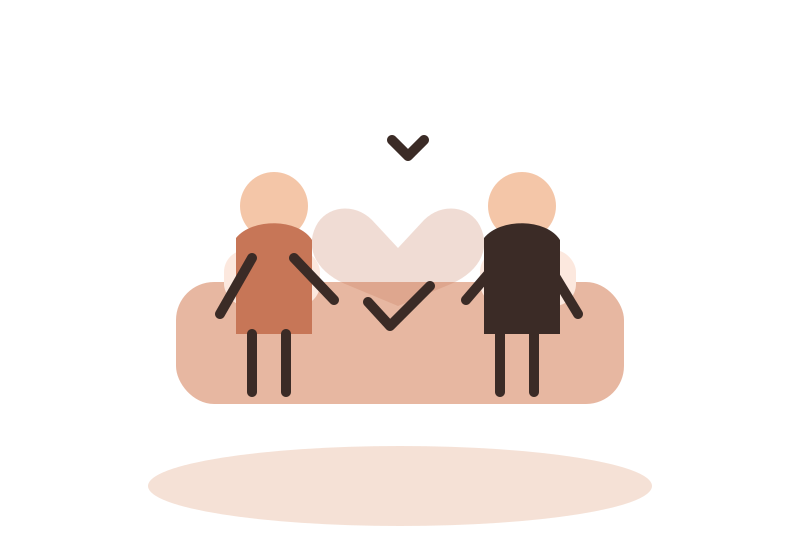
Two partners carefully reconnecting after an argument
Family communicationDifficulty: 3/3Pro scenario

How to practice this conversation

Protect the relationship while stating your boundary, and focus on present needs instead of reopening old conflicts.

  1. Observation

    Name verifiable facts and remove words such as “always,” “never,” or assumptions about intent.

  2. Feeling

    Describe what you actually feel instead of disguising a judgment about the other person.

  3. Need

    Connect the feeling to a need such as clarity, respect, cooperation, or safety.

  4. Request

    Use “Practice restoring connection first, acknowledging the emotional impact, and then making one small, specific repair request.” to shape a specific, actionable request that leaves room for a response.

Scenario-specific practice

An opening and response plan for Reconnect After an Argument

Use these lines as practice prompts, not a script to repeat word for word. Replace bracketed details and example counts with facts you can verify, then adjust to the response you actually receive.

Try this opening

I’d like to reopen the conversation about [conflict or event]. I recognize that I said or did [my specific behavior], followed by [observable impact]. I still care about our relationship. Would you be willing to let me listen to how this affected you at [time]? If now does not work, you can tell me when would be better.

A response you may hear

You want to talk now? You were not listening to me earlier. I do not want this to turn into another debate about who was right.

Your next move

Do not lead with an explanation of your intent or add “but.” Reflect the concern that the conversation may become another argument, and own only the specific behavior you can verify. Ask what would make the conversation feel safer. If your partner requests a pause, respect it and state the repair action you will take next.

Turn a risky phrase into NVC

Likely to escalate the conversation

Enough—stop making this a big deal. I already apologized. What else do you want?

A clearer rewrite using NVC principles

When I said or did [my specific behavior] and we then experienced [observable state], I felt sad and uneasy because respect and connection matter to me. I am willing to take responsibility for that behavior. Would you tell me how it affected you and, when you are ready, discuss [one small, specific repair step]?

What success looks like

  • Names the speaker’s own behavior and observable impact without “but” or a demand for immediate forgiveness.
  • Invites the other person to speak, listens and reflects if they choose to share, and stops pressing if they decline or request a pause.
  • Makes one small request that can be declined and names one repair action the speaker will take regardless of the response.

Common questions for this scenario

Should I apologize immediately when reopening the conversation?

You can take responsibility and apologize for a specific behavior, but do not use the apology to demand immediate reconciliation. Avoid conditional wording such as “if you felt hurt”; listen to the impact and explain how you intend to repair it.

What if my partner is not ready to talk?

Respect the decision not to talk yet. You may ask once for a better time, then give space. You can still complete a repair action within your control without repeatedly asking for a response.

Guest mode

Guests can try 1 free scenario and history is not saved. Sign in to keep practicing and save your latest 5 sessions.

Choose the conversation role

You will practice this scenario with this role.

Select Conversation Role

Choose a personality type for the AI to play, simulating real conversation challenges.

Reinforce the same skills with more family conversations.

View all scenarios

Want context for this category first? Explore the family use case guide